
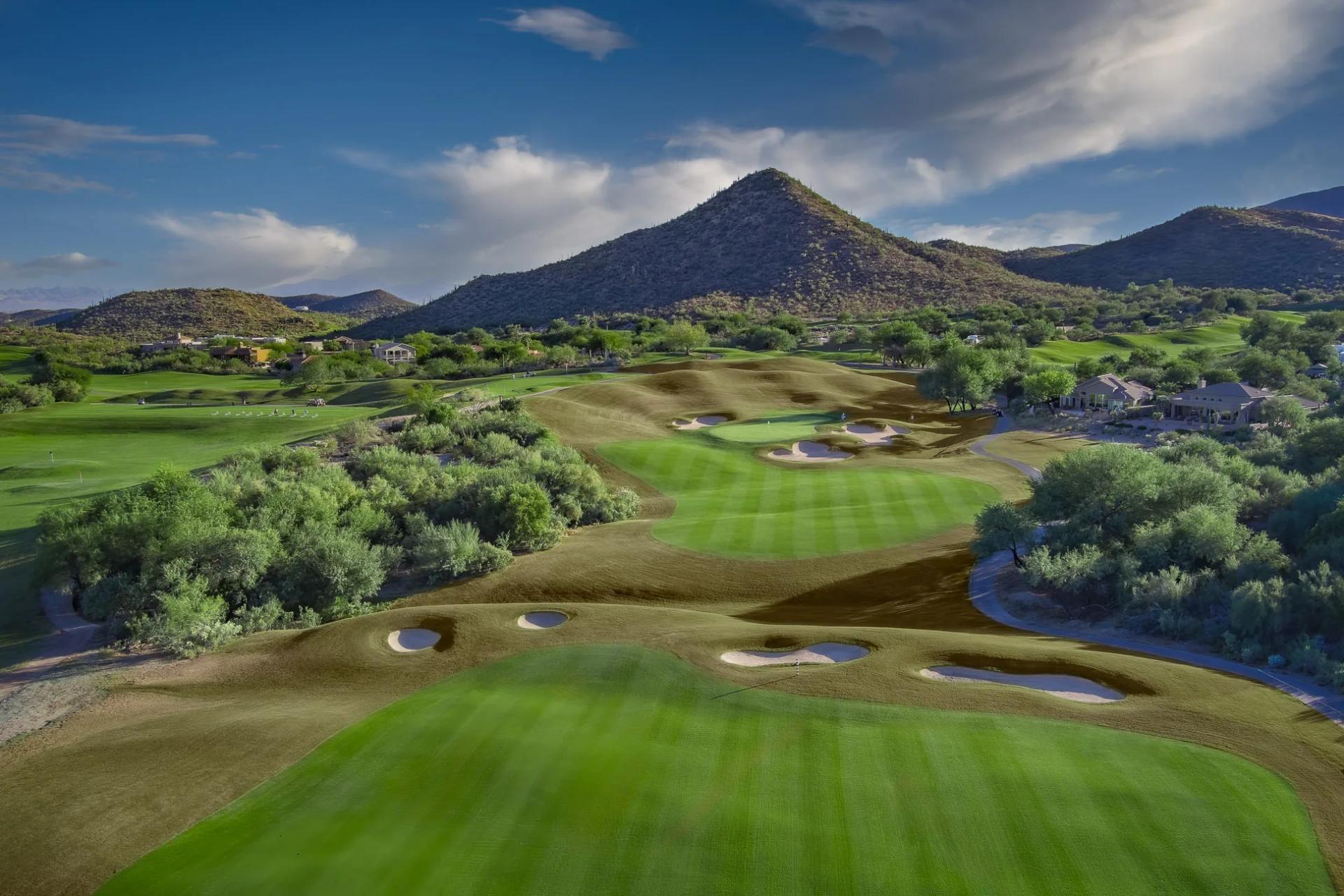
Public Play · Tucson
The Club at Starr PassTucson
Tucson Mountains desert golf that hosted the PGA Tour's Tucson Open from 1987 to 1996.
Par
72
Yardage
6,951
Rating · Slope
74.2 · 145
Holes
18
Green Fee
$59–$104
The Course
About The Club at Starr Pass
The Club at Starr Pass is the golf course of the JW Marriott Tucson Starr Pass Resort & Spa, on the western outskirts of Tucson against the Tucson Mountains. Its 27 holes, the Gambler, Pioneer and Palmer nines, wind through mountains and arroyos. Troon runs it as a daily-fee and resort course, and memberships are also sold. The card on this page pairs Gambler and Pioneer, 6,951 yards from the Gold tees.
History
The Club at Starr Pass — History
Bob Cupp and Craig Stadler designed the original 18, which opened in 1986 as TPC at Starr Pass, and the PGA Tour's Tucson Open was played here from 1987 to 1996. Phil Mickelson won it in 1991 as a 20-year-old amateur. The club became Starr Pass Golf Club in 1993. Arnold Palmer later redesigned the original 18 and added a third nine. Troon took over in 2023, and the renovated club reopened on November 1, 2025.
Design
The Club at Starr Pass — Design
The club describes three nines that wind through the mountains and arroyos as a true desert experience, and Troon notes dramatic elevation changes and saguaro-studded ground crossed by ravines. The renovation finished for the 2025 reopening brought new TifEagle Bermuda greens, rebuilt bunkers and refurbished bridges. Gambler and Pioneer, the nines on this card, are the Cupp and Stadler holes under their new names.
What Sets It Apart
Why Play The Club at Starr Pass
A 20-year-old Phil Mickelson won the 1991 Tucson Open here as an amateur, and the signature hole, Pioneer's 6th, follows the stagecoach trail Richard Starr cut through the Tucson Mountains in 1884.
The Round
The Journey at The Club at Starr Pass
I.
The Opening
Gambler starts gently with a 380-yard par 4, then stiffens: the 2nd and 3rd are both 450-yard par 4s, and the 3rd ranks third-hardest on the card. The 398-yard 4th is another solid par 4 before the 510-yard 5th, a par 5 that is nevertheless the No. 1 handicap. The 204-yard 6th, the first par 3, rates among the easier holes.
II.
The Middle
The 436-yard 7th leads to the 203-yard 8th and the 489-yard par-5 9th, which closes Gambler at 3,520 yards and par 36. Pioneer, the second Cupp and Stadler nine, opens with a 436-yard par 4 and a 423-yarder, then reaches the 495-yard 12th, a par 5 that still ranks as the fourth-hardest hole on the card.
III.
The Finish
After the 435-yard 13th and the 170-yard 14th, the easiest hole by handicap, comes the signature 15th, Pioneer's 6th: a 350-yard par 4 whose fairway follows Richard Starr's 1884 stagecoach trail through the Tucson Mountains. The 198-yard 16th precedes the longest hole on the card, the 543-yard par-5 17th, rated No. 2. A 381-yard par 4 finishes Pioneer at 3,431 yards.
How to Play It
The Club at Starr Pass — Playing Strategy
Beginner / High Handicap
A 145 slope and 74.2 rating from the 6,951-yard Gold tees mark this pairing as demanding. The 2026 scorecard offers Black, Silver, Blue and Red sets on this pairing, down to about 5,200 yards, so pick one that keeps the long par 4s reachable. Everything off the turf is desert, so a ball in play beats distance. The 14th and 15th are the holes to score on.
Intermediate / Mid Handicap
The card's teeth are the 450-yard 3rd, the 510-yard 5th and the 543-yard 17th, the three hardest holes. Treat those two par 5s as three-shot holes and lay up to a yardage you like. The pair of 450-yard par 4s comes early, so warm up properly; the shorter Pioneer holes, the 15th especially, are where strokes come back.
Advanced / Low Handicap
At 510 and 489 yards, the front-nine par 5s are the obvious places to try for two, but the 5th is the No. 1 handicap, so go only from the fairway. The 350-yard 15th is the best birdie chance on Pioneer. The four par 3s run 170 to 204 yards; hit the center of each green and save aggression for the 1st, 15th and 18th.
Signature Holes
The Club at Starr Pass — Signature Holes
The Card
The Club at Starr Pass Scorecard
| Hole | 1 | 2 | 3 | 4 | 5 | 6 | 7 | 8 | 9 | Out | 10 | 11 | 12 | 13 | 14 | 15 | 16 | 17 | 18 | In | Total |
|---|---|---|---|---|---|---|---|---|---|---|---|---|---|---|---|---|---|---|---|---|---|
| Par | 4 | 4 | 4 | 4 | 5 | 3 | 4 | 3 | 5 | 36 | 4 | 4 | 5 | 4 | 3 | 4 | 3 | 5 | 4 | 36 | 72 |
| Yards | 380 | 450 | 450 | 398 | 510 | 204 | 436 | 203 | 489 | 3,520 | 436 | 423 | 495 | 435 | 170 | 350 | 198 | 543 | 381 | 3,431 | 6,951 |
| Handicap | 13 | 11 | 3 | 5 | 1 | 17 | 7 | 15 | 9 | — | 6 | 14 | 4 | 8 | 18 | 10 | 16 | 2 | 12 | — | — |
Good to Know
The Club at Starr Pass — questions answered
- How do I book a tee time at The Club at Starr Pass?
- Find and book live tee times at The Club at Starr Pass through GolfNow — Golf in PHX links straight to its tee sheet on this listing.
- How much does it cost to play The Club at Starr Pass?
- Green fees at The Club at Starr Pass are typically $59 to $104, varying by season, day of week and time. Confirm current rates when you book.
- Who designed The Club at Starr Pass?
- The Club at Starr Pass was designed by Bob Cupp and Craig Stadler; redesigned by Arnold Palmer and opened in 1986.
- What is the par and yardage at The Club at Starr Pass?
- The Club at Starr Pass plays to a par of 72 over 6,951 yards from the championship tees, with a course rating of 74.2 and a slope of 145.
- Is The Club at Starr Pass public or private?
- The Club at Starr Pass is open to public play. Tee times can be reserved in advance.
- Where is The Club at Starr Pass located?
- The Club at Starr Pass is located at 3645 W. Starr Pass Blvd., Tucson, AZ 85745, in the Tucson area of Scottsdale & Phoenix.
More in Tucson
More golf courses in Tucson
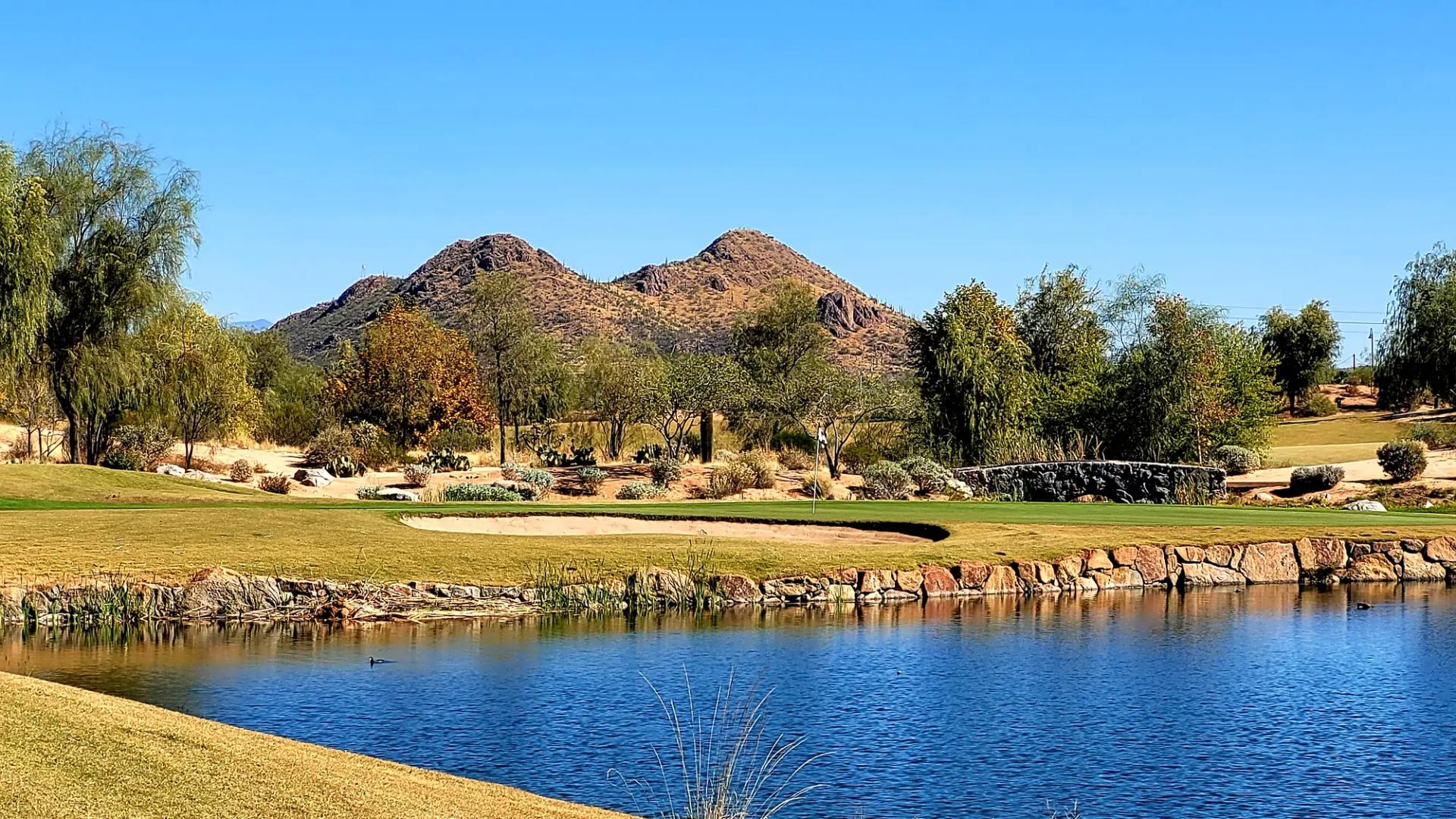
Notah Begay III · Tucson
Sewailo Golf Club
Notah Begay III's lake-and-stream course at the Pascua Yaqui Tribe's Casino Del Sol in Tucson.
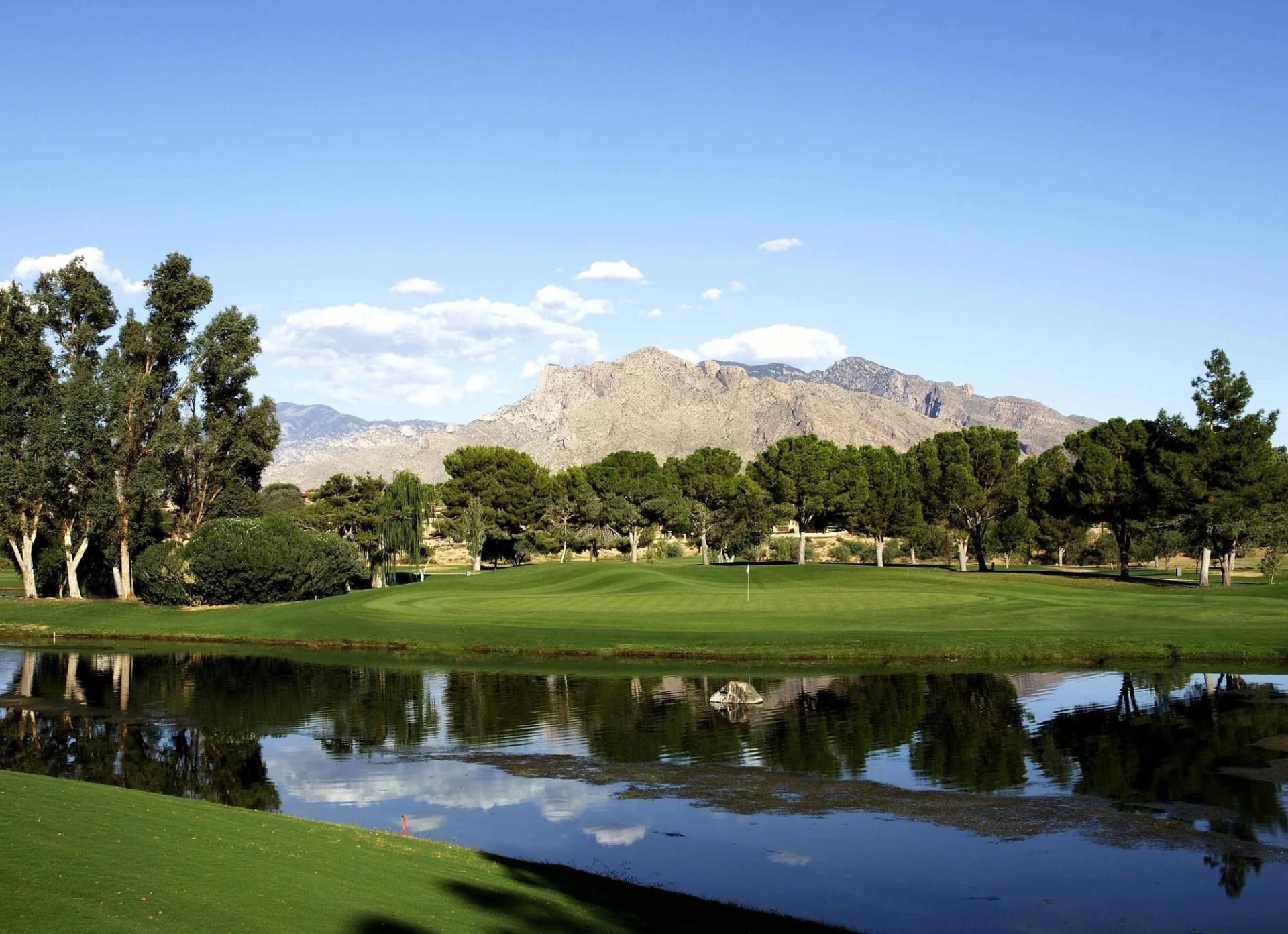
Robert Bruce Harris; renovated by Bruce Devlin and Robert von Hagge · Tucson
Omni Tucson National — Catalina Course
The Catalina Course at Omni Tucson National, Tucson Open host from 1965 to 2006.
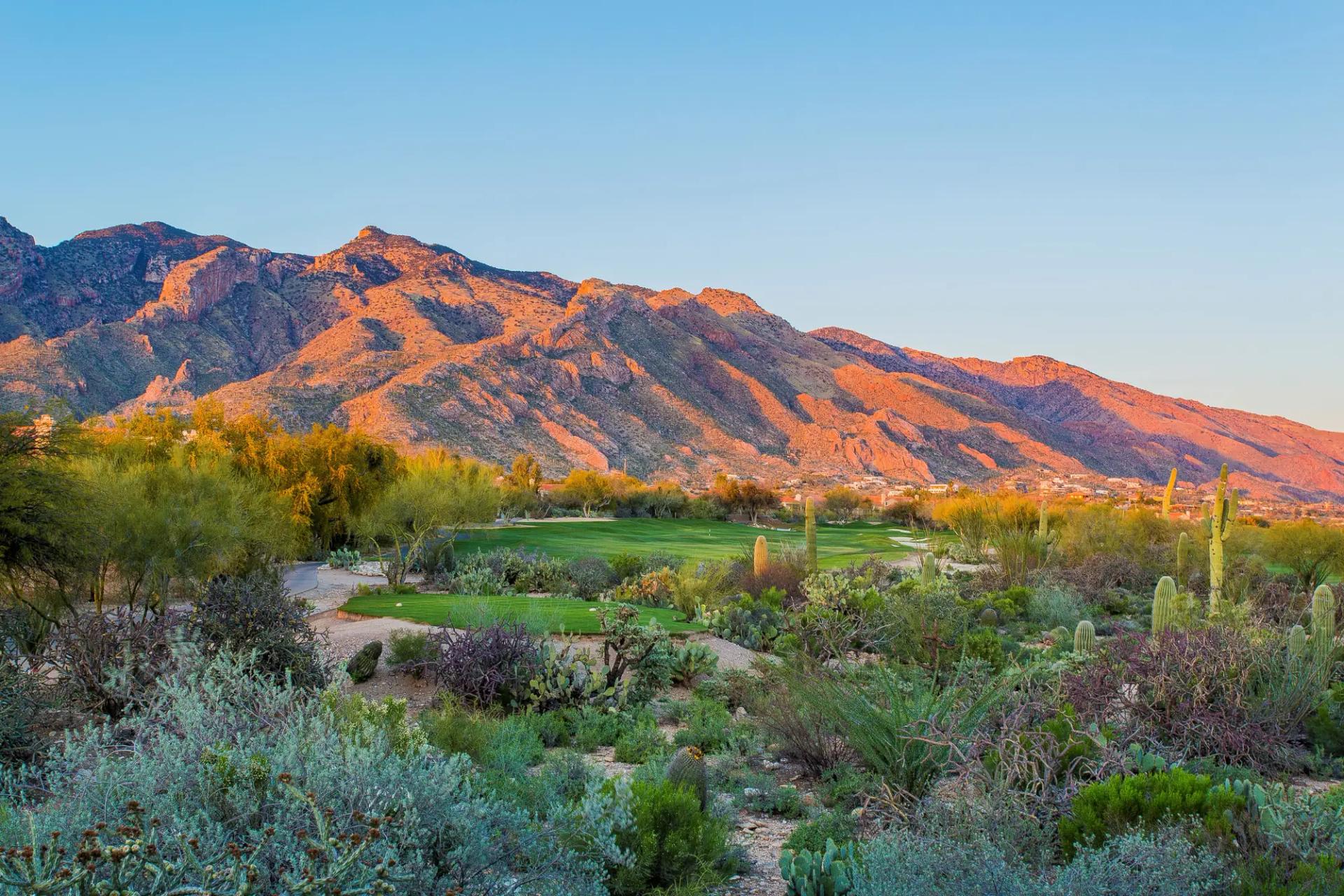
Jack Nicklaus · Tucson
La Paloma Country Club
A private 27-hole Jack Nicklaus Signature club at the base of Tucson's Santa Catalina Mountains.
How to Play It
Book a Tee Time at The Club at Starr Pass.
Find and book live tee times at The Club at Starr Pass on GolfNow.
Golf in PHX is an independent guide — we don’t sell tee times or mark them up. We map the exact way on.